Hwadamsup Fall Foliage Tickets and the Myeongnyundang Ginkgo at Seonggyungwan: How to See the Two Spots I Missed This Year
Contents
I had two places picked out for fall foliage this year. One was Hwadamsup, an arboretum in Gwangju, Gyeonggi Province. The other was the ginkgo tree in front of Myeongnyundang at Seonggyungwan in Seoul. I looked up how to book and how to get there, and then my schedule simply refused to cooperate. I made it to neither.
It felt like a waste to throw that research away, so I'm writing it down. That way, next-autumn me won't have to search all over again, and anyone planning the same trip won't miss the dates. The two places couldn't be more different. At Hwadamsup, getting a ticket is half the battle. At Myeongnyundang, you just walk in.
The short version
- Hwadamsup is 100% advance booking. This year's peak-season tickets went on sale on Wednesday, September 16, at 1 p.m.
- Admission is 11,000 won for adults (about 8 USD), and the monorail costs 5,000–9,000 won extra
- The Myeongnyundang ginkgo is free with no booking. From November to February, you can visit from 9 a.m. to 5 p.m.
- The leaves are usually yellow from late October to mid-November
- Hwadamsup is open until November 29 this year. The leaves are falling, but there's still a chance
Start with next autumn's calendar
I put both schedules on one page. The dates are based on Hwadamsup's 2026 notices and the usual ginkgo timing in past years.
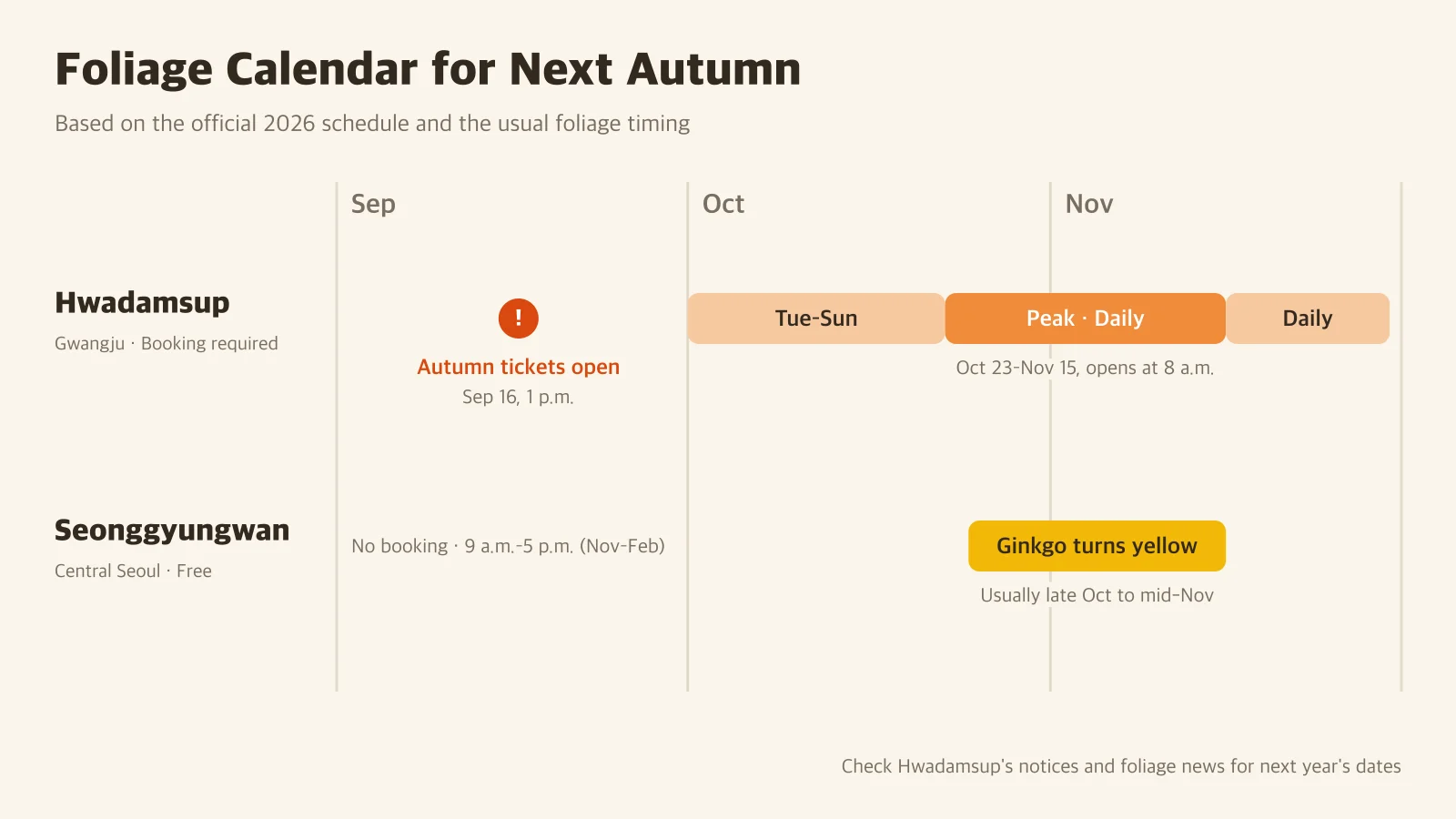
The first date for Hwadamsup is booking day in mid-September, a month before the leaves turn. Myeongnyundang has no booking, so all you need to do is watch the ginkgo news from late October.
Hwadamsup: getting a ticket is half the battle
What it is
Hwadamsup (화담숲) means "Hwadam Forest." It's an arboretum that the LG Evergreen Foundation built as a public-interest project. It sits on a hillside behind Konjiam Resort in Docheok-myeon, Gwangju, with 16 themed gardens spread over 165,265 m² (about 41 acres). It officially opened in 2013. The collection covers about 4,000 native and introduced plant species, and in autumn, some 400 varieties of maple alone change color, including Naejang maple, Korean maple, and three-flowered maple.
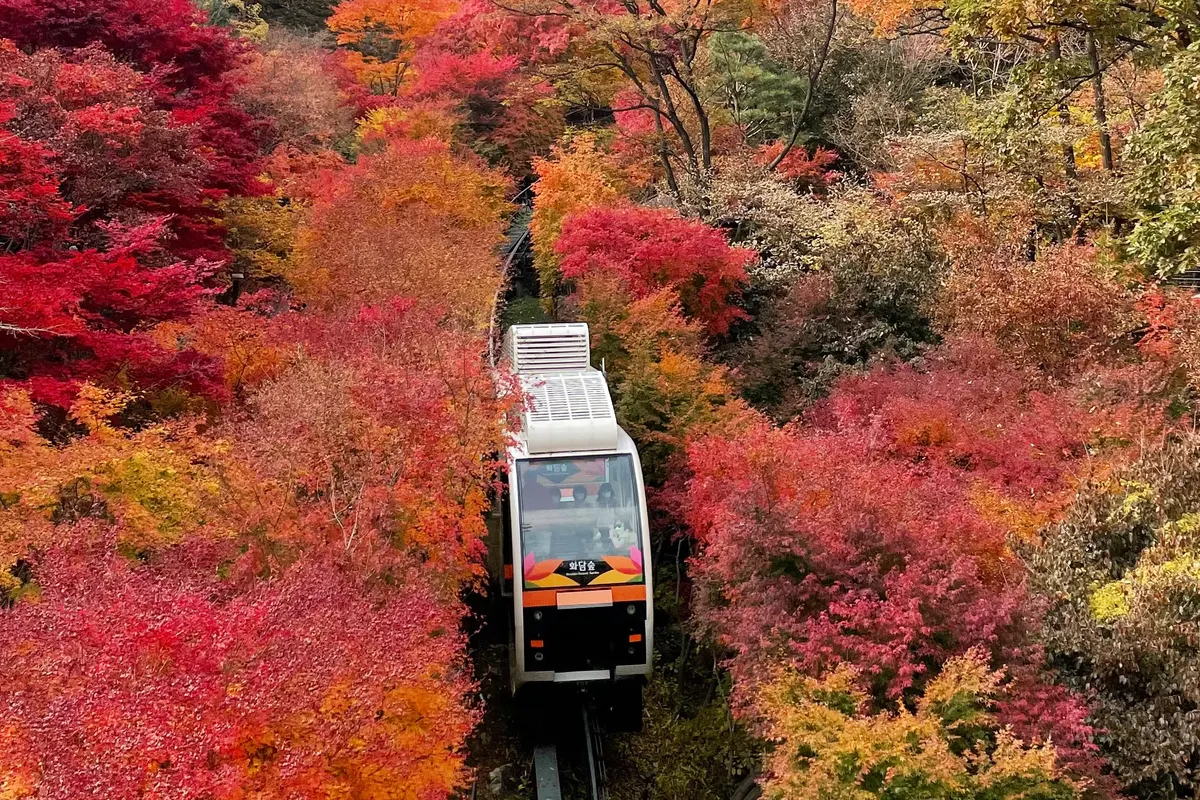
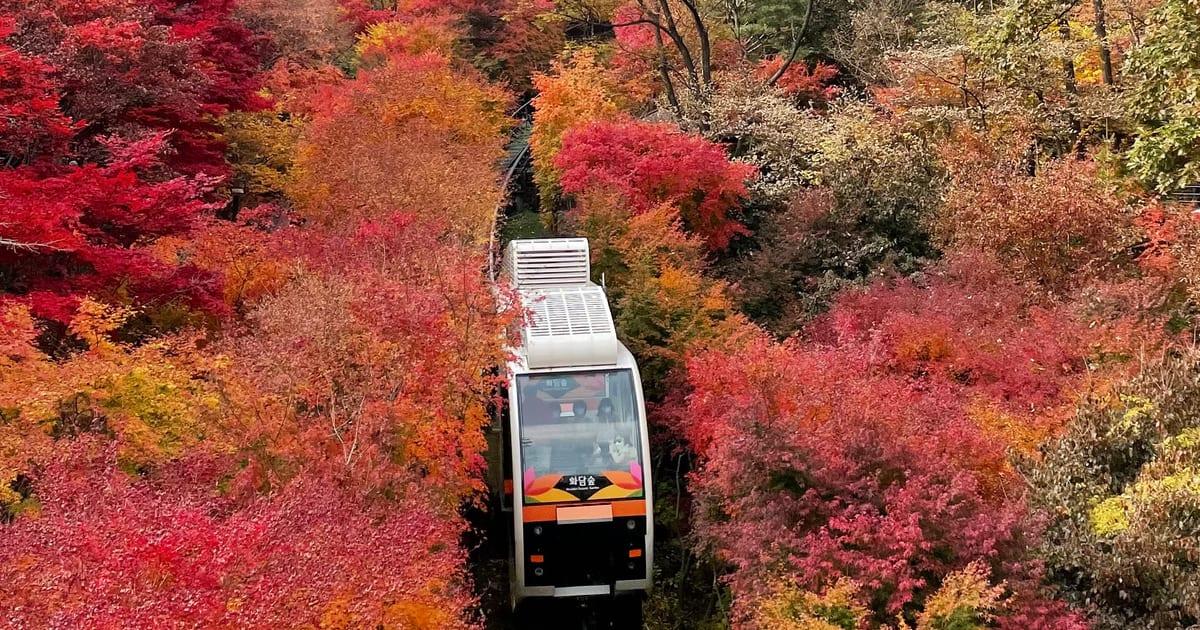
This monorail is the image most people picture when they hear "Hwadamsup." Both sides of the track are covered in maples, so from above it looks like the car is cutting through a red forest.
1. Booking: watch for the mid-September notice
You can't just buy a ticket at the gate. This year, the peak-season notice went up on September 1, and sales opened on Wednesday, September 16, at 1 p.m. The booking button on the official website sends you to NOL, a Korean ticketing app run by Nol Universe, where you pick a date and an entry time and pay.
If next year works the same way, start checking the Hwadamsup notice board in early September. These were the rules in this year's notice:
- During peak season (October 23 to November 15), each person can buy up to 6 tickets.
- You can only enter at the time you booked.
- Discounts for people with disabilities, national merit recipients, LG U+ members, and preschool groups don't apply during peak season.
- If you get caught reselling tickets at a markup, your booking is canceled and you may owe a penalty of 10 times the ticket price.
Cancellation rules differ for admission and monorail tickets:
| Type | Admission | Monorail |
|---|---|---|
| Full refund | Up to 1 day before | Up to 1 day before |
| 30% cancellation fee | On the day, or if no-show | Until 2 hours before boarding |
| No refund | None | Within 2 hours of boarding, or no-show |
2. Opening hours and prices
This year's autumn hours, from the October–November visitor information, were split like this. Last entry is one hour before closing.
| Dates | Hours | Last entry | Closed |
|---|---|---|---|
| Oct 1–22 | 09:00–18:00 | 17:00 | Mondays (Oct 12, 19) |
| Oct 23–Nov 1 | 08:00–18:00 | 17:00 | None |
| Nov 2–15 | 08:00–17:00 | 16:00 | None |
| Nov 16–29 | 09:00–17:00 | 16:00 | None |
Prices are taken straight from the visitor guide. The monorail isn't included in admission, so you buy it separately.
| Ticket | Admission | Monorail section 1 | Section 2 | Full loop |
|---|---|---|---|---|
| Adult | 11,000 won | 5,000 won | 7,000 won | 9,000 won |
| Senior, teen | 9,000 won | 5,000 won | 7,000 won | 9,000 won |
| Child | 7,000 won | 4,000 won | 6,000 won | 7,000 won |
Adults are 19 to 64, seniors are 65 and older, teens are middle and high school students, and children are from 24 months through elementary school. Babies under 24 months get in free. Residents of Gwangju, Gyeonggi, get a discount if they show ID, but it can't be combined with other discounts.
3. The monorail
The monorail is a 1,213 m (about 0.75 mi) loop that runs from the Moss Garden entrance past the summit and the Bonsai Garden. A full loop takes about 20 minutes.
| Section | Platforms | Ride time |
|---|---|---|
| Section 1 | 1 → 2 | About 5 min (1.9 km, about 40 min on foot) |
| Section 2 | 1 → 3 | |
| Full loop | 1 → 1 | About 20 min |
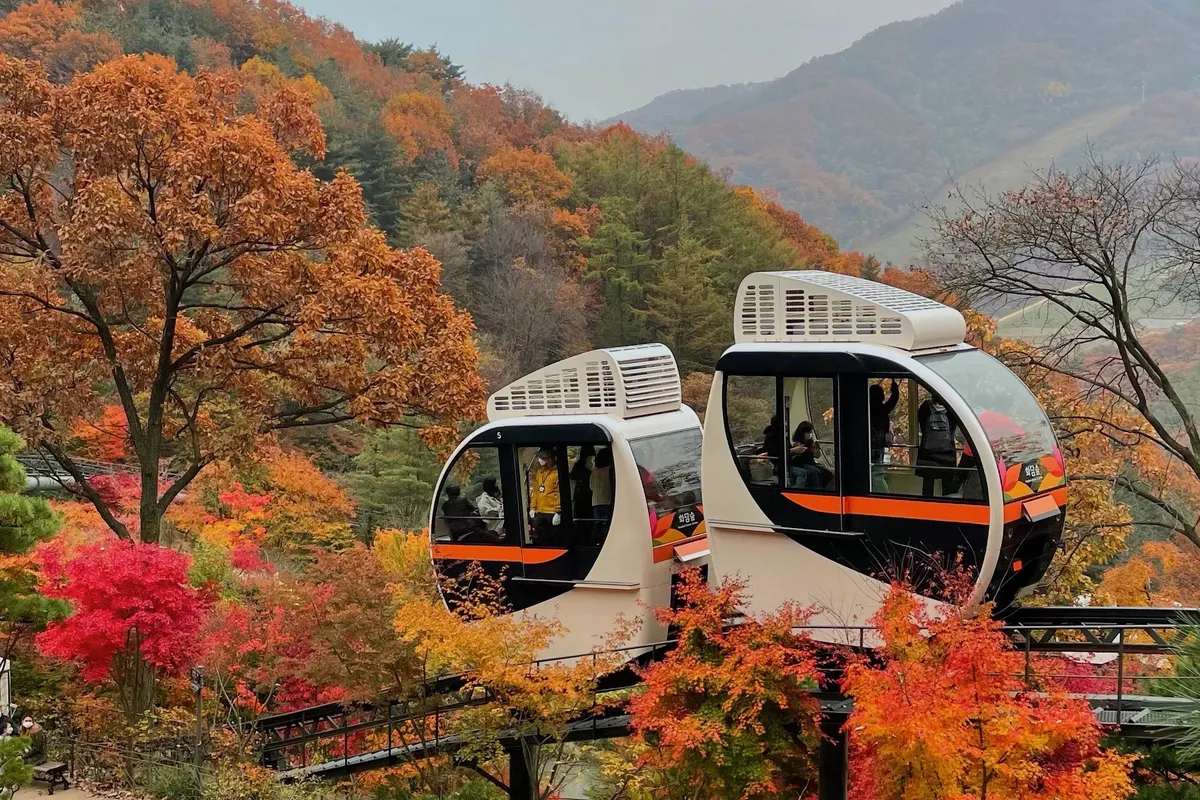
Near the summit, you can see the mountain ridges far in the distance. You can walk up instead, but covering the whole forest on foot takes an adult about 2 hours, so think about your energy level before you decide.
- Only rides departing from Platform 1 can be booked online. Tickets from Platforms 2 and 3 are sold at the ticket machines on each platform.
- Rides run on a fixed schedule, so be at the platform 10 minutes before boarding. If you miss your ride, you can't exchange or refund the ticket.
- Once you get off partway, you can't get back on.
- You ride standing, and strollers and wagons have to be folded.
4. Getting there
The address is 278-1 Docheogwit-ro, Docheok-myeon, Gwangju-si, Gyeonggi-do (경기 광주시 도척면 도척윗로 278-1). If you drive, put Hwadamsup or Konjiam Resort into your navigation app and park at the resort lot where the attendants direct you. The official directions list these public transit options:
| From | Take | Time | Then |
|---|---|---|---|
| Gonjiam Station (Gyeonggang Line) | Gwangju bus 9 or taxi | About 30 min | Arrive at Hwadamsup |
| Gangbyeon Station | Intercity bus 1113-1 | About 1.5 hr | From Gonjiam Terminal, take a taxi or bus 9 |
| Jamsil Station | Intercity bus 500-1 | About 1.5 hr | From Gonjiam Terminal, take a taxi or bus 9 |
| Gangbyeon Station | Intercity bus 500-2 | About 1 hr 40 min | From Gonjiam Terminal, take a taxi or bus 9 |
This year, from November 17, the slope parking lot is closed while Konjiam's ski area gets ready to open. Park in parking tower 2 or 4 and take the shuttle bus to Hwadamsup. The lift only runs until November 19. If you plan to go after mid-November next year, check the parking notice again.
Good to know before you go
- You can't bring picnic mats or food inside. Leave food in a locker, or eat it at the designated eating area to the left of the ticket office plaza before you go in.
- Alcohol, tents, sunshades, cooking gear, collecting tools, tripods, balls, kick scooters, and drones aren't allowed either. Pets can't come in.
- Every themed garden is accessible by stroller or wheelchair. Just take care on the slopes and narrow paths.
- You can visit in the rain, but the monorail stops when there's lightning.
The Myeongnyundang ginkgo at Seonggyungwan: just walk in
What it is
Seonggyungwan (성균관) was the highest national academy of the Joseon Dynasty. Its grounds include Munmyo (문묘), the shrine that holds the spirit tablets of Confucius, and Myeongnyundang (명륜당), the hall where Confucian scholars studied. The ginkgo in the Myeongnyundang courtyard is the Ginkgo Tree of Munmyo Confucian Shrine, Seoul, designated a natural monument on December 7, 1962.
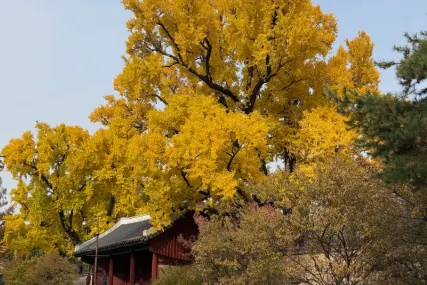
Even from the street outside the walls, the ginkgo rises far above the hanok (한옥, traditional Korean building) roof. Red pillars and yellow leaves side by side are what autumn looks like here.
The Korea Heritage Service lists these measurements:
| Item | Value |
|---|---|
| Age | About 400 years |
| Height | 26 m (about 85 ft) |
| Girth at breast height | 12.09 m (about 40 ft) |
The tree is also known for its well-developed yuju (유주, 乳柱), lumpy growths that hang down from the branches.
There are two accounts of who planted it and when. The Korea Heritage Service's description says it was probably planted in 1602, when Munmyo was rebuilt after burning down during the Japanese invasion of 1592. The sign on site says Yun Tak, a senior Seonggyungwan official under King Jungjong, planted it. Yun Tak reportedly said that "when the roots are deep, the branches and leaves are sure to flourish," and called the tree Munhaeng (文杏), the "ginkgo of learning."
Ginkgo trees ended up at Seonggyungwan because of an old saying that Confucius taught his students under a ginkgo. The tree became a symbol of Confucianism, so ginkgos were often planted at schools such as local Confucian academies.
The old ginkgo trees at Munmyo are all male, so you won't get the smell of fallen ginkgo fruit that fills many streets every autumn.
When to go
The leaves are usually yellow from late October to mid-November. A 2022 Seoul city article said the ginkgo in Myeongnyun-dong turns a little later than elsewhere and can be seen until mid-November. A citizen reporter who watched the trees for five years found that the ginkgo on the east side of the Sammun gate peaks earlier than the one on the west side.
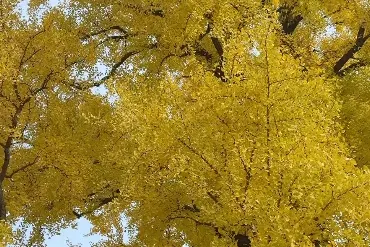
Look up from under the tree and you only see bits of sky between the leaves. With branches reaching 26 m high and all of them yellow, it feels like a yellow roof over your head.
Mornings are better. According to a 2021 article, even at 10 a.m. on a weekend there were enough people to form a line at the photo spots. The classic shot is taken from the wide stone platform in front of Myeongnyundang, looking up at the ginkgo.
Directions and visitor information
| Item | Details |
|---|---|
| Address | 31 Seonggyungwan-ro, Jongno-gu, Seoul |
| Hours | March–October 09:00–18:00, November–February 09:00–17:00 |
| Admission | Free |
| Subway | Hyehwa Station (Line 4), Exit 4, about a 10-minute walk to Sungkyunkwan University's entrance |
| Phone | +82-2-760-1472 |
The Sammun gate, Munmyo's main entrance, stays closed except during memorial rites. Instead, follow the wall next to the parking lot toward Myeongnyundang. There's no separate parking information, so the subway is the easier option.
The two places side by side
| Item | Hwadamsup | Myeongnyundang ginkgo |
|---|---|---|
| Location | Konjiam Resort, Gwangju, Gyeonggi | Myeongnyun-dong, Jongno-gu, Seoul |
| Booking | Required, opens in mid-September | Not needed |
| Cost | 11,000 won for adults, monorail extra | Free |
| Time needed | About 2 hours, plus travel | One tree, so a short stop works |
| What you see | About 400 maple varieties, the monorail | One 400-year-old ginkgo |
| Best for | A full day of fall colors | A quick look at yellow leaves on a lunch break |
Myeongnyundang is close to Daehak-ro, so it's an easy stop after a meal near Hyehwa Station. If you want more ginkgo in central Seoul, see my ginkgo walk around Gyeongbokgung Palace.
Set one reminder for next September
If you don't want to end up like me, with the research done and no trip, add a reminder to your phone's calendar now for the first week of next September: "Check Hwadamsup autumn booking notice." When the sale date is announced, set another reminder for 1 p.m. that day. For Myeongnyundang, write "Go see the ginkgo" in late October.
If you're not ready to give up on this year, there's still a chance. Hwadamsup is open until November 29. The leaves are falling, but if you'd like a walk through a late-autumn forest, see if any tickets are left.
Opening hours, prices, and booking dates are based on the Hwadamsup website, the Korea Heritage Portal, and Seoul city articles, checked on November 17, 2026. Next year's schedule may change, so please check again before you go.
The two Hwadamsup photos were uploaded to Wikimedia Commons by Thqkrdl (monorail, monorail and ridges, taken in November 2021) and cropped to a landscape format. Both the originals and the cropped versions are licensed under CC BY-SA 4.0. This post was originally written in Korean and translated into English.