Saving a Mystery Frozen Salmon by Basting It in Garlic Oil
Contents
My mom took a salmon fillet out of her freezer and handed it to me. I asked when and where she bought it, and she couldn't remember either. So this is a frozen salmon of unknown origin and unknown age.
At a time like this, Koreans trust one thing: garlic. Koreans eat more than 6 kg (13 lb) of garlic per person each year, second only to China. Garlic is practically the soul of Korea, so I used it to cook this mystery salmon.
The short answer, if you're in a hurry
- Dip the frozen salmon in hot water for a moment and the skin peels right off
- Put minced garlic and peperoncino in olive oil over low heat
- Don't flip the salmon. Keep spooning the garlic oil over it as it cooks
- Salt alone is enough for seasoning, and there's a soy sauce version too
Garlic saves frozen salmon
Fish that has sat in the freezer for a long time makes you worry about a fishy smell. When you cook garlic slowly in oil, the oil takes on the garlic flavor, and spooning that oil over the salmon coats the outside with it. I didn't notice any fishy smell from the first bite to the last.
Cooking garlic and peperoncino in olive oil is exactly how you start aglio e olio. Think of it as the same dish with salmon instead of noodles.
Ingredients (serves 1)
- 1 frozen salmon fillet, about 300 g (10 oz)
- 3 tbsp minced garlic (enough to cover the top of the salmon)
- 4 tbsp olive oil
- 3 dried peperoncino chilies
- Salt and pepper
How to make it
1. Peel the skin with hot water
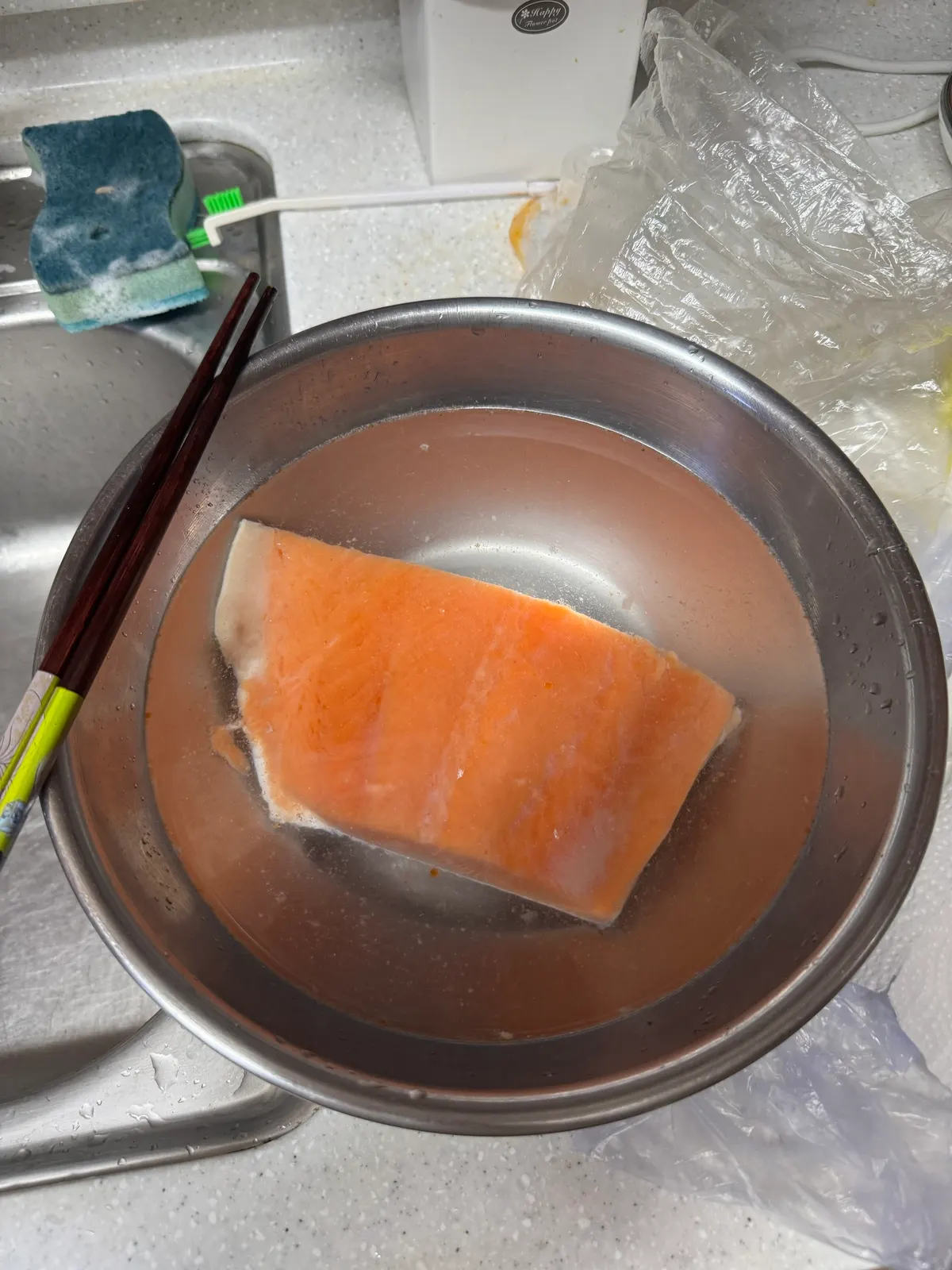
Dip the frozen salmon in hot water for a moment and take it out. The layer between the skin and the flesh loosens first, so you can grab the edge of the skin and pull it off.
Just don't leave it in hot water for long. Korea's Ministry of Food and Drug Safety advises against thawing fish in warm water and recommends the fridge or cold water instead (in Korean). Use the hot water only while you peel, and take the fish out once the skin is off.
2. Make the garlic oil
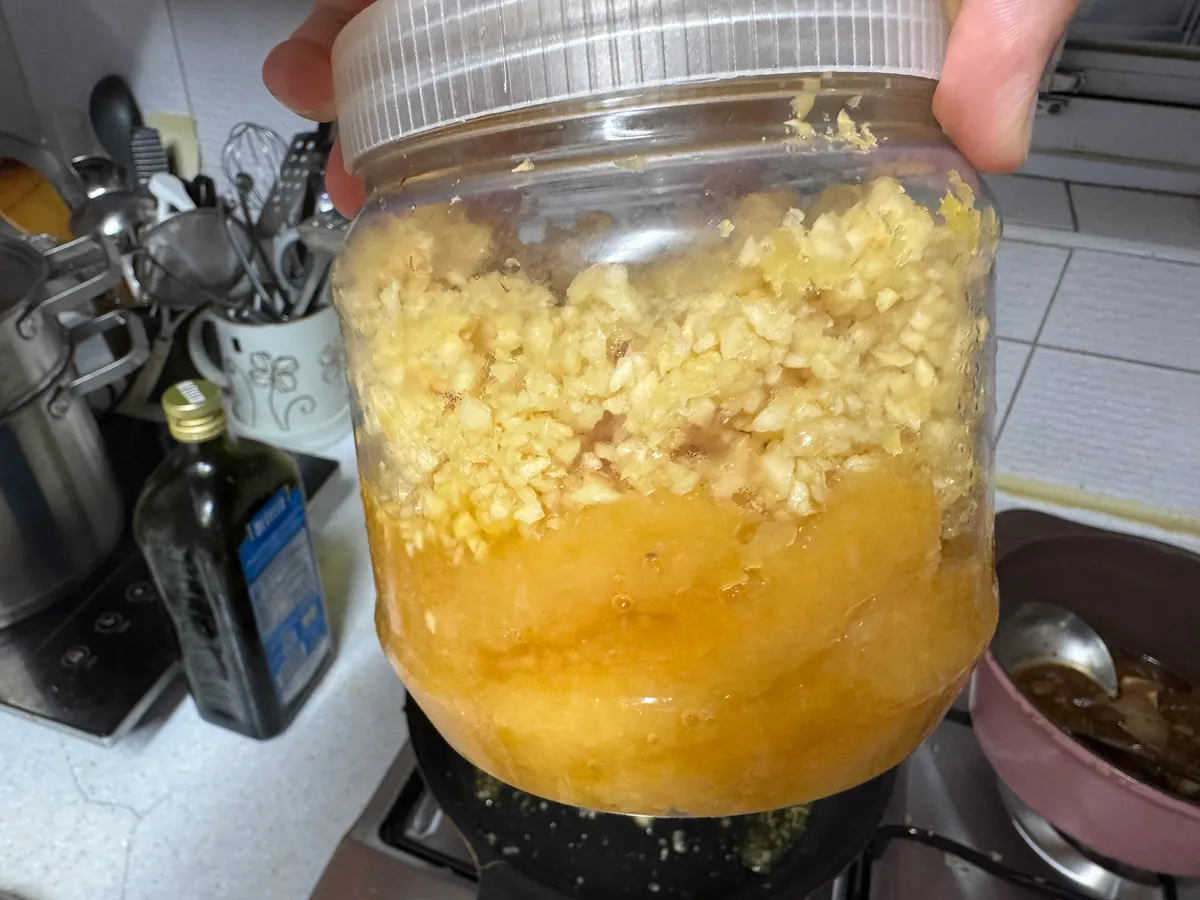
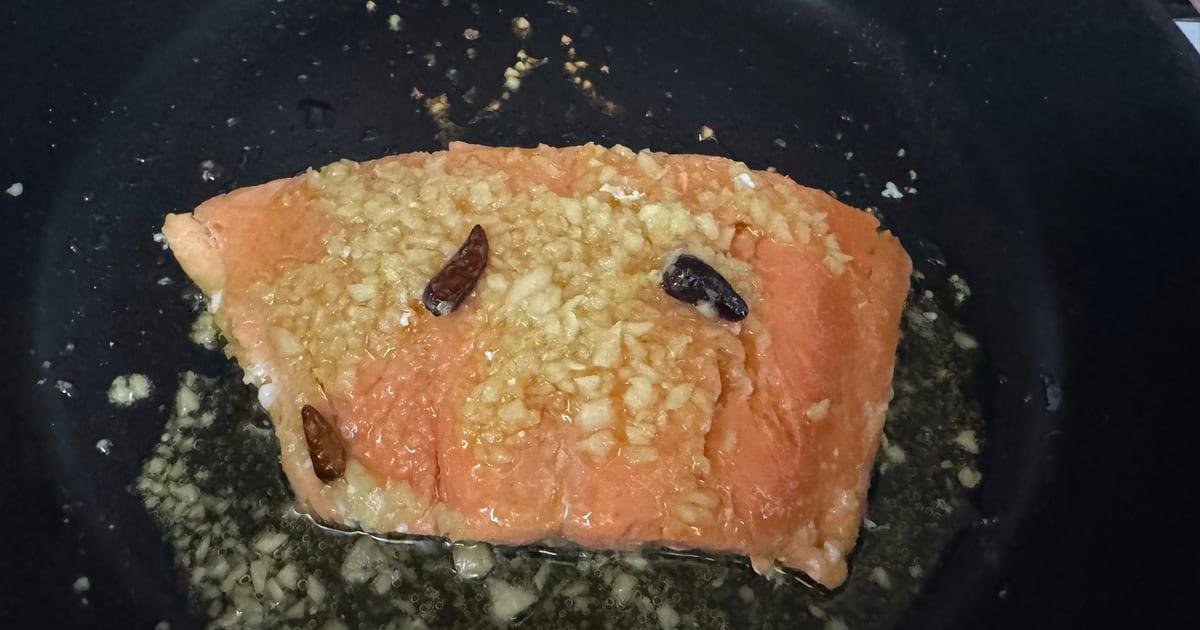
I used the minced garlic I already had at home. Pour olive oil into a pan, add the minced garlic and peperoncino, and set it over low heat. Garlic burns quickly on high heat, and burnt garlic turns bitter. Small bubbles rising gently through the oil is all you need.
3. Baste without flipping
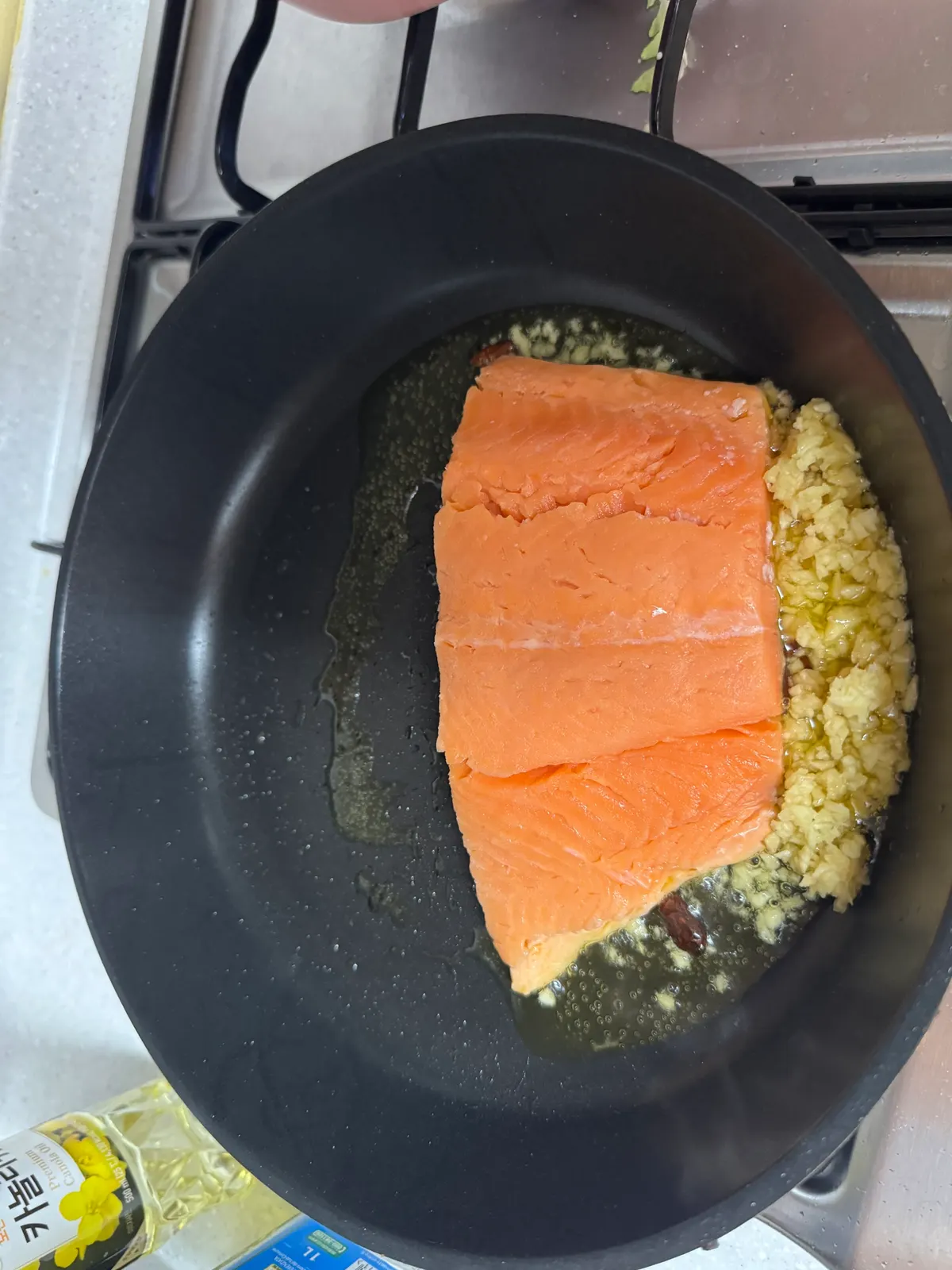
Put the salmon next to the garlic oil. Don't flip the salmon at any point. Tilt the pan a little so the oil pools on one side, then keep spooning it over the salmon.
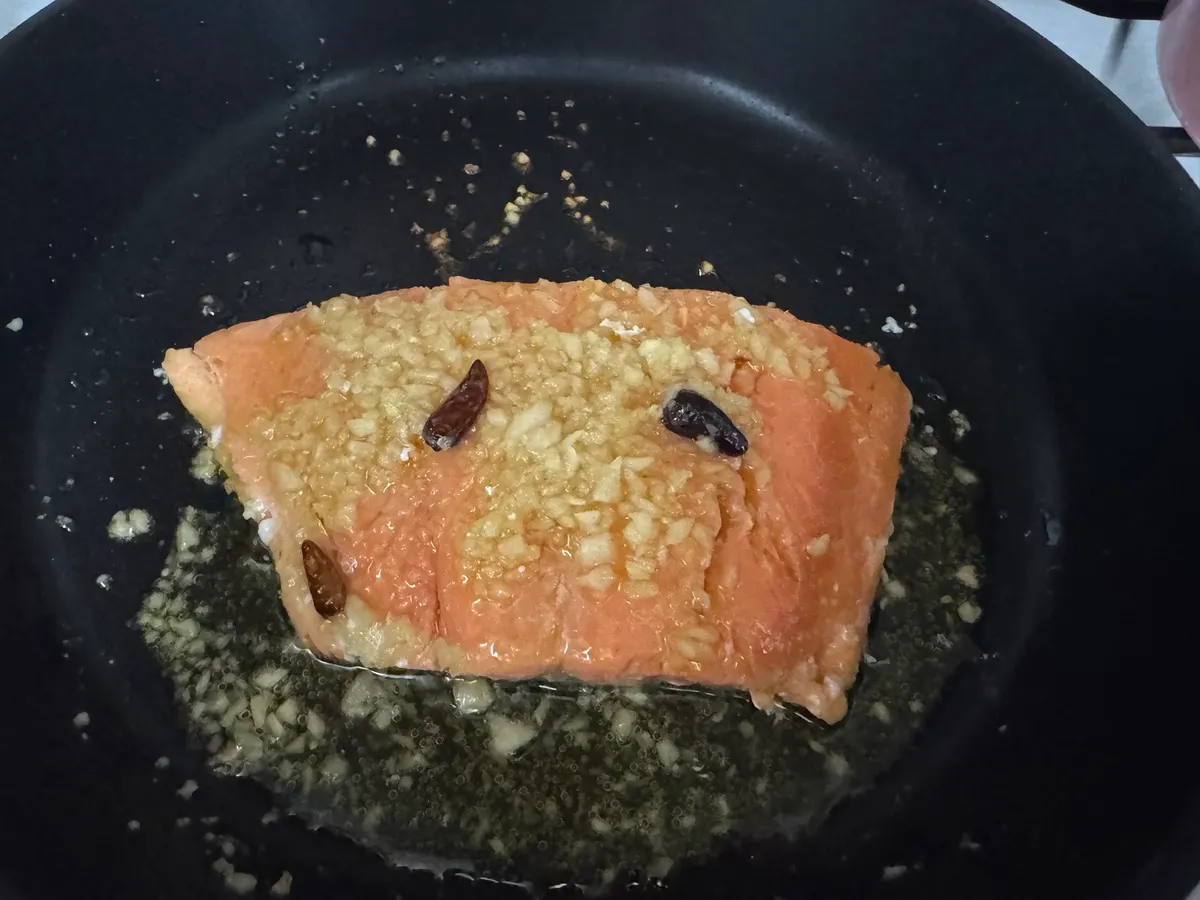
Spoon some of the garlic onto the salmon too. The bottom cooks against the pan, and the top cooks under the hot garlic oil. In French cooking this is called arroser. It's usually done with butter, but olive oil works.
Skinless salmon is soft and tends to break apart when you flip it. With basting, you never have to.
4. Check that it's cooked, then season with salt
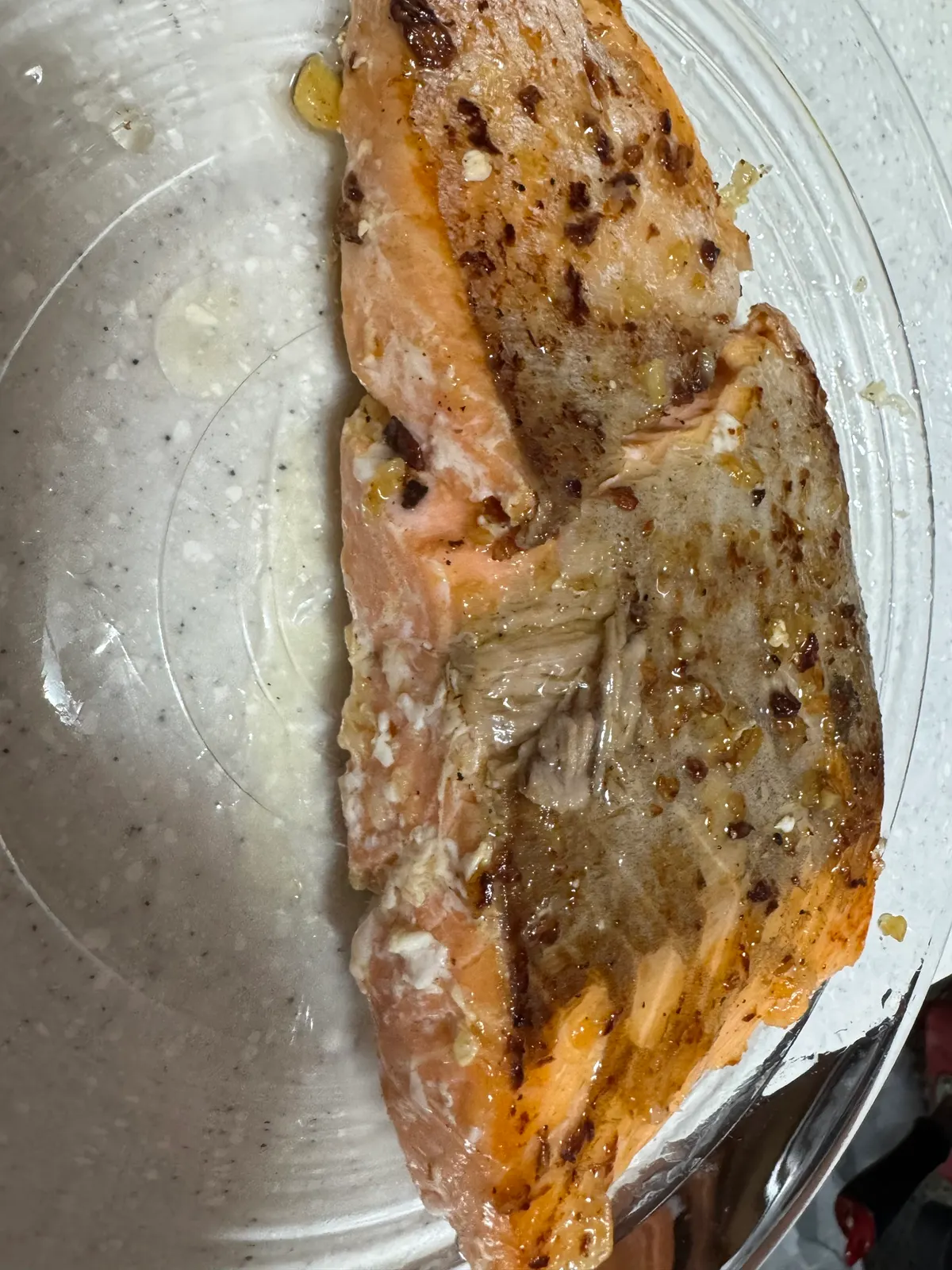
Gently pull apart the thickest part with chopsticks. If the center has turned opaque and separates easily along the grain, it's done. US food safety guidelines also say to cook fish to an internal temperature of 63°C (145°F), or until the flesh is opaque and separates easily with a fork.
Salt and pepper are all the seasoning it needs. The garlic oil already tastes nutty, so a sprinkle of salt is all it takes.
The empty plate says it all
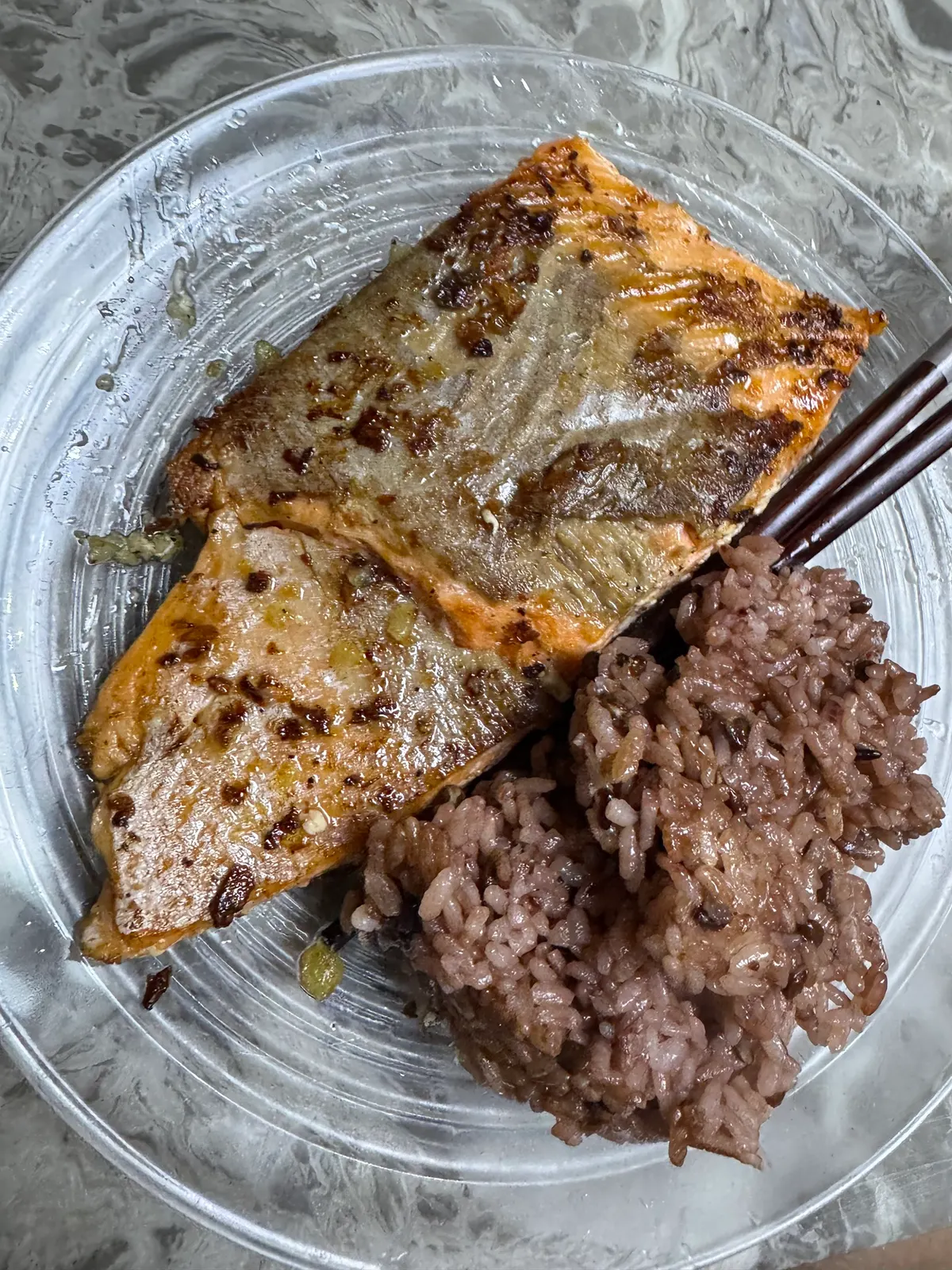
Served next to lentil rice, it made a full dinner. The garlic on the outside was golden and nutty, and the inside was moist with no fishy smell.
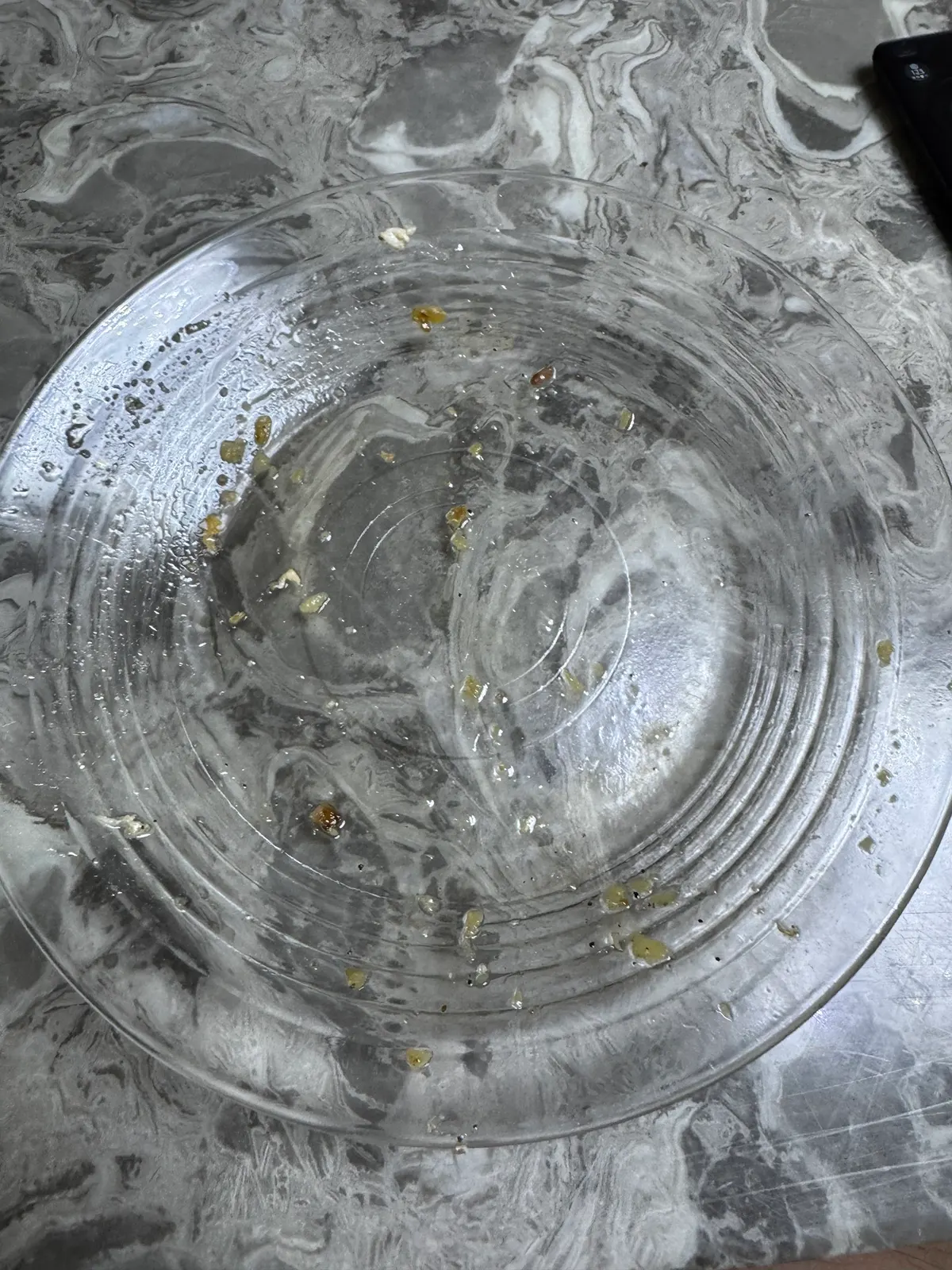
And this is what the plate looked like afterward. Only a few bits of garlic were left. Next time I end up with frozen salmon, I'm making it this way again.
You can switch to a soy sauce glaze
I seasoned mine with salt only, but there are plenty of soy-glazed salmon recipes on Korean recipe sites. The ratio varies, but most mix soy sauce, mirin, and sugar at roughly 2:2:1. For one serving, start with 2 tbsp soy sauce, 2 tbsp mirin, and 1 tbsp sugar.
When the salmon is almost done, pour the sauce into the pan and baste with it instead of the garlic oil, letting it reduce. I haven't tried this version myself yet. Soy sauces vary in saltiness, so use a little less at first and adjust as you taste.
Take that salmon out of the freezer tonight
If there's a salmon fillet in the back of your freezer and you can't remember when it went in, take it out for dinner tonight. All you need is minced garlic and olive oil. Just remember: don't flip, keep basting.
That's all from a boy who is hopelessly devoted to lentil rice.
I checked the food safety information on November 16, 2026, against guidance from Food Safety Korea (식품안전나라) and the US FoodSafety.gov. The soy sauce ratio is based on several recipes, and I haven't made it myself.
This post was originally written in Korean and translated into English.